Where gods come in 神の宿る場所
「今、ここ、私」 常に自分に言い聞かせ、そこに戻りなさい、という。 これは、自分がベストのパフォーマンスで人生を生きていく、最高のライフスキルだ。過去を悔いるのでなく、未来を憂うのでなく、他人と比較するのでなく。自分が今ここでやるべきことを、きちんとベストの状態でやること。昨今の心理学や精神医学、脳科学がいう「ライフスキル」は、すべて仏教の智慧に依拠しているように思う。
数学者・岡潔は、朝から晩まで秒刻みの予定をこなしても、思考はなんら深まっていかないと言っていた。本当の思考は、思考が思考を呼び、深まっていくもの。1時間おきにタスクを切り替えていては、振り出しに戻って表面的なリフレインになるだけだという。 「何も考えず、何もしない10分間をとることで、そこに神の思考が降りてくる」。 この言葉には、強い衝撃を受けた。
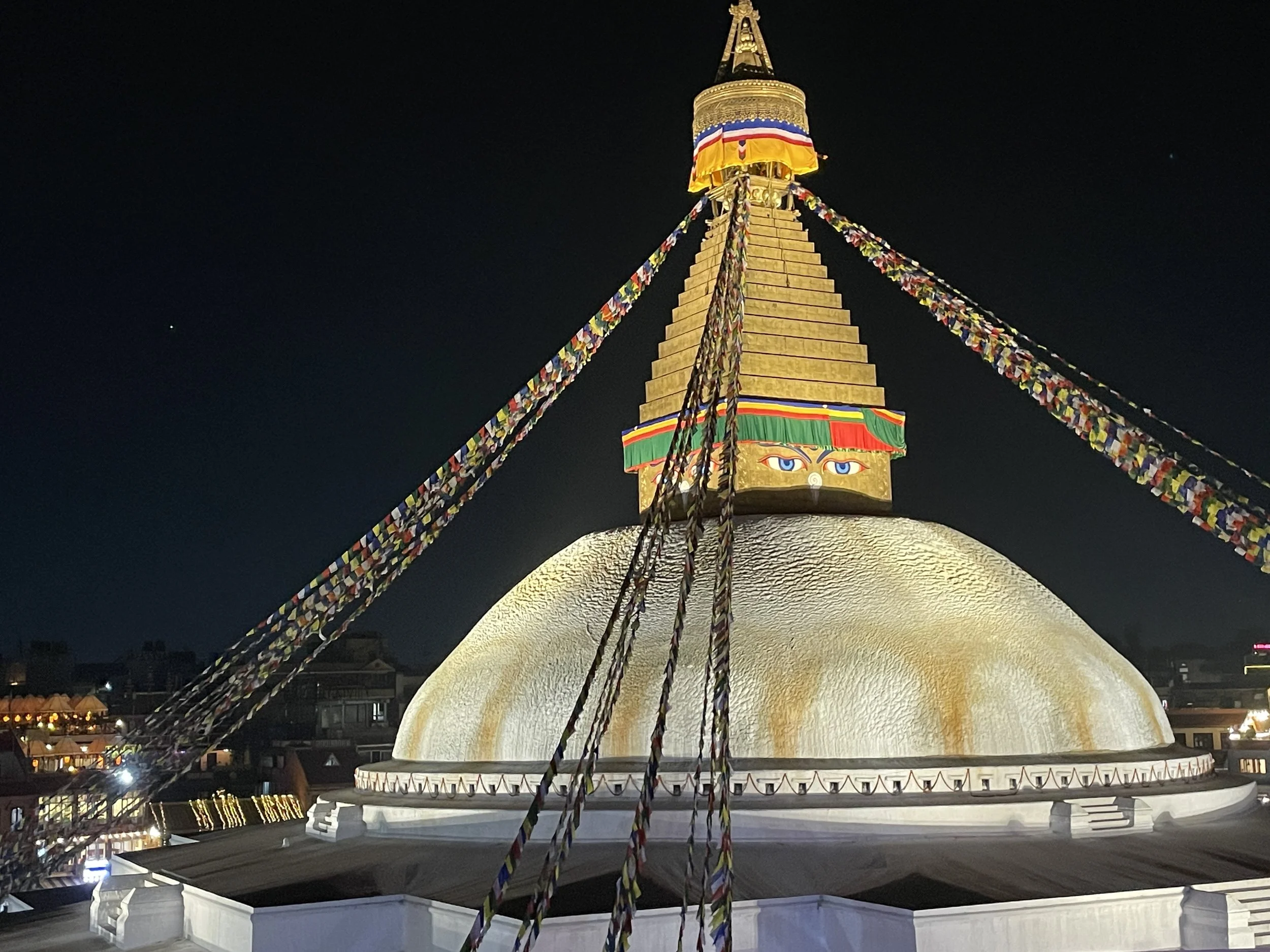
大小のStupaがカトマンズのいたるところにあり、神様の場所でみんなの集まる場所でもある
何もない空間に、神が宿る。 それは神道の考えにも通じる。無印良品のデザイナーである原研哉は、神社の真ん中にある「やしろ」というのは、「神が宿る、かもしれない」から、一応そういう場所を空けておくためにあるのだといっている。Slow Art Collective で17年間一緒に仕事をしているディランはすごいサウンドアーティストでもあるが、インドネシアの音楽にも詳しい。ガムランの音楽は微妙にチューニングがあっておらず、それはそこに神が降りてくる音の空間を作ってあるのだと教えてくれたことがある。みな同じことをいっているような気がする。
先月Slow Art Collectiveとしてディランと三週間カトマンズーにて滞在制作をしてきた。その時、何かそういう場所がある、と強く思った。
私はもうそう若くない。だからこういうことをよく考えている。この歳になって、今、自分が大切にすべきものはなにか。 そして私がおそれているのはなにか。ひとつは自分がアーティストとしてやるべきことを探すこと、そしておそれているのはそれを達成せずに人生を終わることだと思っていた。
でもそうではないのかもしれない。そのために私はどんな「ふうに」それを成し遂げようとしてきたのか、ということが大切なのだ。それが自分がアートの価値として強調している「プロセスベース、過程重視、寄り道重視」の極意であるはずで、アートだけでなくすべてその姿勢はあてはまるべきことだろう。そしてそれは、神がやどる場所をあけておくことで日々みちびかれていくものなのかもしれない。
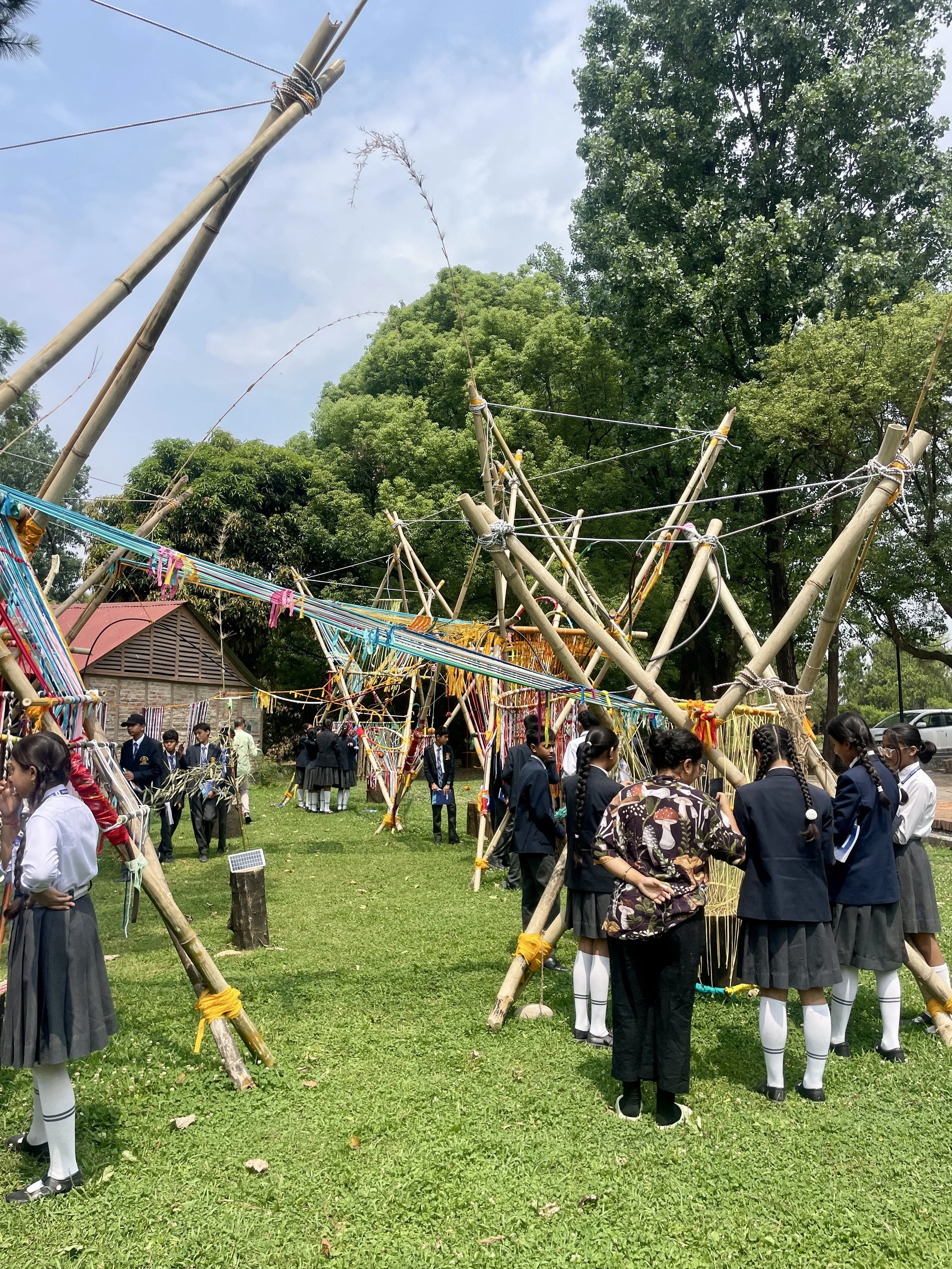
Taragaon Nextというコミュニティー型の美術館。そこでこのElectric Color Transfer Stationという作品を作った。初日にきた高校生たち
私は自分の残り少なくなってきた人生のなかでやろうとしていることはなにか、考えてみる。私の出発点はアート制作と自分のライフスタイルを繋いで作品としていくということだった。今もそれは色んな意味でかわっていない。いらないとおもわれるものや身の回りにおいて価値に気づかないものをアートにしていきたい。
だからソロ活動においては、自分の身の回りのもの、足元にあるものを、庭にただあるもの、それらを選択して、つなげたり編んだり組み合わせていったりしていくことで、アートという場所にもっていくこと、自分の足元の生活がアートの入り口であることを体現していくこと。それらをさまざまな角度からさまざまなアプローチで考えていくこと。
常にzenであり、punkであること。静謐であり過激であること、秩序と破壊が共存していること。それが私たちの生きている世界であるということ。それがエントロピーと呼ばれるものの両極であり、そのあいだを行き来するということだけでなく、それは共存し同時に存在しているものだと思っている。
Slow Art Collectiveの活動においては、ディランとともに、アートの制度を壊していくこと、アートをdemocratize(民主化)していくこと、アートをパブリックの場に還元していくこと。私たちの持つ感性と美学によってある場所を作り出し、そこを開放して、パブリックとともにフュージョン(融合)していく場所にすること。ディランの作る動く作品や私の作るテキスタイルやロープのつながり、遊びの制作が化学変化をおこして融合してできてくるものである。
私の「やしろ」は、自分の家の庭であり、スタジオであり、アートの現場である。 そこで土やロープや竹と関わりながら、そこに神が宿るか、どんな神が宿るであろうか、と毎日考えている。
"Here, Now, I." I constantly tell myself this, commanding my mind to return to the present. I believe this is the ultimate life skill for living one's life at peak performance. It is about not regretting the past, not worrying about the future, and not comparing oneself to others—but simply doing what needs to be done right here, right now, in the absolute best state possible. It seems to me that everything called a "life skill" in modern psychology, psychiatry, and neuroscience is, without exception, rooted in the wisdom of Buddhism.
The renowned Japanese mathematician Kiyoshi Oka once said that even if you schedule your day down to the second and accomplish a vast number of tasks, your thinking will not deepen in the slightest. True thought, he argued, is a process where thought sparks more thought, deepening organically. If you switch tasks every hour, you simply reset to zero, merely repeating things on a superficial level. He said that by taking ten minutes to think of nothing and do nothing, "the divine mind" descends into that space. This was a shocking revelation to me.
The idea that the divine resides in an empty space is also found in Shinto. Kenya Hara, the designer for MUJI, noted that in the center of a shrine, there is always an empty place called a yashiro (a sacred sanctuary), which exists simply because "the gods might dwell there." They leave the space open just in case. Dylan, with whom I have worked in the Slow Art Collective for 17 years, is an incredible sound artist who is also deeply knowledgeable about Indonesian music. He once told me that Gamelan music is intentionally tuned slightly out of sync to create an acoustic space where the gods can descend. It feels as though everyone is pointing toward the very same, profoundly important truth.
Last month, Slow Art Collective spent three weeks in Kathmandu for an artist residency. There, I felt a powerful, undeniable insight that such a space truly exists.
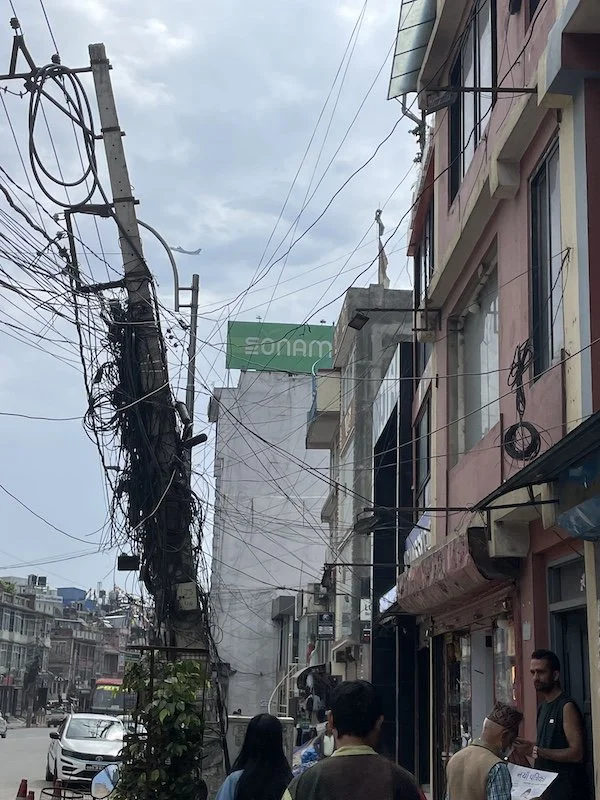
街の至る所にこうした巨大な電線が倒れそうに建っている
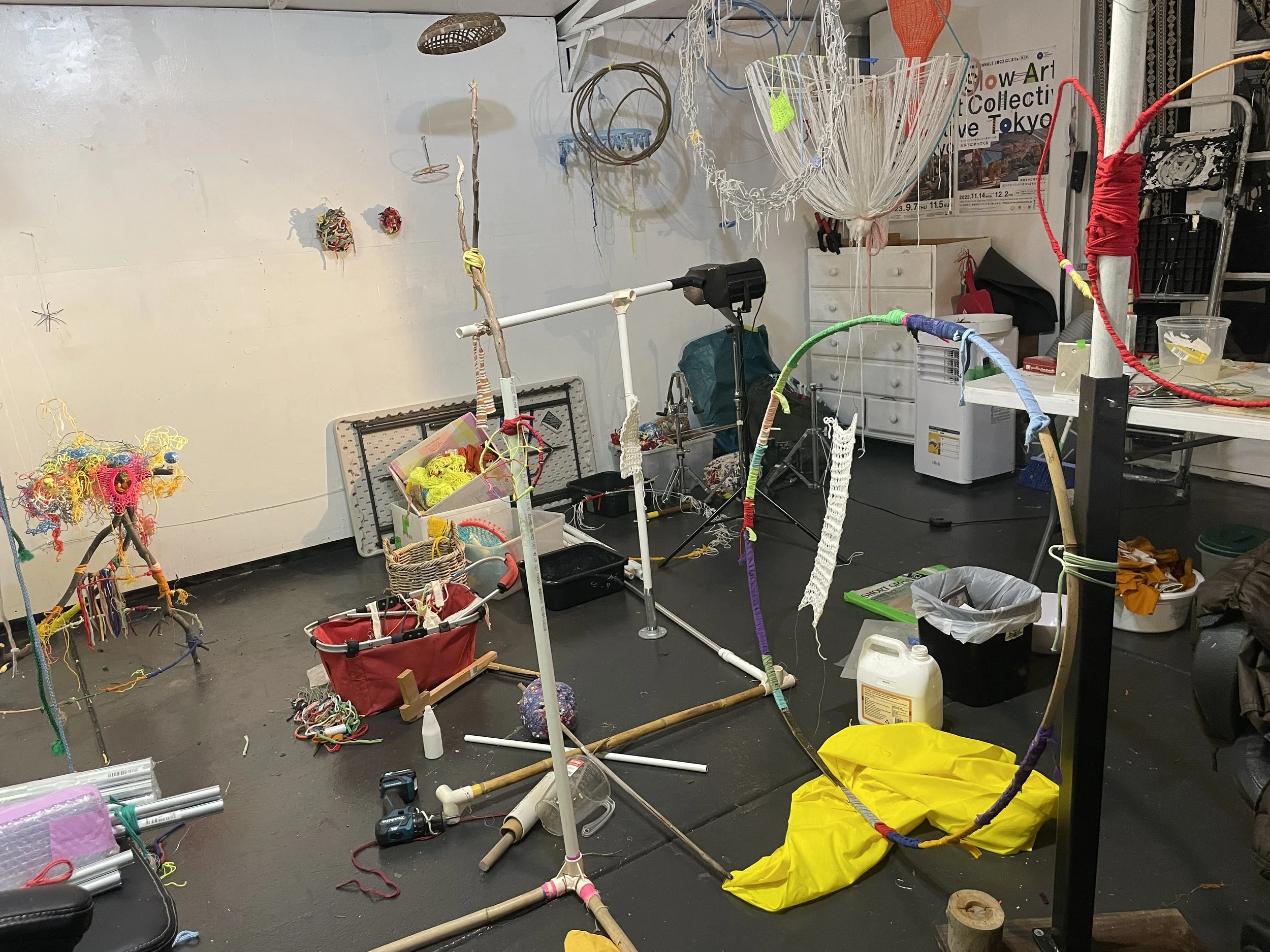
我が家のガレージの小さなスタジオはいつもカオスと禅状態とを激しく行き来する
I am no longer so young, which is why I find myself reflecting on these things so often. At this stage in my life, what is it that I should truly cherish? And what am I actually afraid of? I used to think my greatest fear was searching for my purpose as an artist and ending my journey without achieving that greatness.
But perhaps that is not it. What truly matters is how—in what manner—I have tried to achieve it. This must be the ultimate essence of what I emphasize as the value of art: being "process-based, focusing on the journey, and valuing the detours." This attitude should apply not only to art but to everything in life. And perhaps, by keeping a space open for the divine to dwell, we are guided through our days.
What am I trying to accomplish in the time I have left in this life? My starting point was always to connect my art-making with my lifestyle, turning life itself into a work of art. In many ways, that has never changed. I want to transform things that are deemed useless, or everyday things whose value goes unnoticed, into art.
Therefore, in my solo practice, it is about selecting the things around me, the things beneath my feet, or things just sitting in the garden—connecting, weaving, and combining them to elevate them into the realm of art. It is about embodying the philosophy that our everyday, immediate life is the very gateway to art. It is about exploring this from various angles and through diverse approaches.
To always be both Zen and Punk. To be serene yet radical. For order and destruction to coexist. This is the very world we live in. These are the two extremes of what we call entropy; it is not just about moving back and forth between them, but existing in a state where both coexist and occur simultaneously.
In the activities of the Slow Art Collective, alongside Dylan—with whom I am incredibly fortunate to share such deeply aligned values—the goal is to dismantle the formal institutions of art, to democratise it, and to return it to the public sphere. Through our shared sensibility and aesthetics, we create a space, open it up, and allow it to become a place of fusion with the public. This emerges from a powerful chemical reaction—a fusion of the kinetic works he creates, and the textiles, ropes, and playful creations I make.
My own yashiro is my backyard garden, my studio, and the site of my art. As I engage with the soil, the ropes, and the bamboo, I wonder if the divine dwells in that space. Every day, I find myself wondering what kind of god might come to reside there.